
Bumpy Flight How to Take Off and Land
The two minutes that decide whether the rest of the crew's work becomes a complete or a crater.
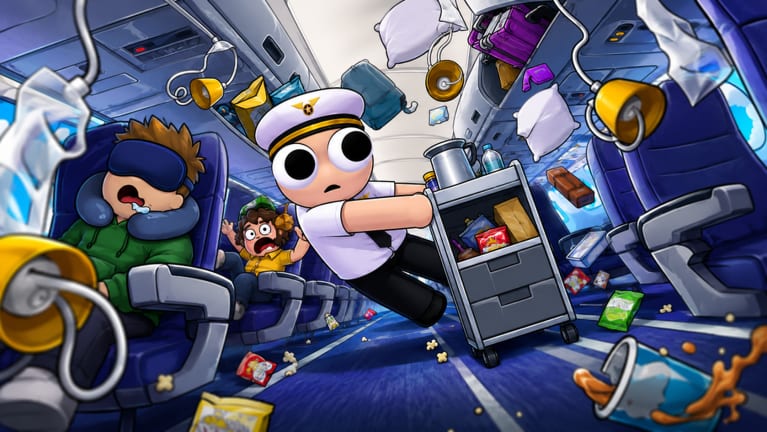
Most Bumpy Flight routes die at the ends. Crews spend ten minutes loading bags, then the Pilot holds SHIFT like a sprint key and the aircraft becomes a missile. Or they fly a perfect cruise and arrive high, fast, and surprised that the runway is already behind them. This page is only those two windows: leaving the ground clean, and putting the airplane back on it.
It assumes you already know the official binds on controls and that someone ran the pre-flight checklist. Takeoff does not create fuel. Landing does not seat passengers. If those jobs are still open, you are not ready for this article.
Before the first SHIFT tap
Sit last. Confirm in chat that bags, boarding, early requests, and fuel are done. Confirm someone owns cabin and someone owns the wrench. Then say “I have the plane.” That sentence is not flavor. It tells the lobby to stop stealing the seat and to stop clicking CTRL next to the cockpit door.
Line up on the paved heading you actually intend to use. BETA physics will forgive a crooked pushback more than it will forgive a rotation with the nose already pointed at a hangar. Hands off W until you have energy. Pitching on the roll is how highlight reels get their cartwheels.
Takeoff: energy, then attitude
Throttle is a pulse, not a hold. Tap SHIFT, wait for the note of the engines to change, tap again. You want a climb you can think in, not a zoom climb that turns the first passenger request into a blackout. If the aircraft feels light and the nose walks up on its own, you added too much. Tap CTRL once — once — and wait. Slamming CTRL is how you put the gear back on the grass at ninety knots.
Rotate with a short W. Hold the attitude. Do not chase the horizon with both hands. A and D are for staying on the extended centerline, not for celebrating. Once you are positively climbing, stop adding power. Level the climb into a cruise before the first emergency even has a chance to spawn on a panicked Pilot.
If something fails on the roll — a bag still on the ramp, a passenger ragdoll, a fuel prompt that never closed — reject the takeoff. Idle with CTRL, stay on the pavement, and let the crew finish. A rejected takeoff is cheaper than a complete you already know you will not get. The emergencies guide is for the air. The ground still belongs to the checklist.
The first two minutes after rotation
This is the practice box. Feel how much W keeps the nose still. Feel how long a SHIFT tap takes to show up in the climb. Then stop fiddling. A Pilot who is still “getting the feel” when the engineer calls a fire is a Pilot who will fly the fire into the ground.
Call “positive climb” or “I have it” so cabin can walk. Do not unlock the mouse. If you need a menu, ask someone else to click. CTRL is still the throttle-cut key. Details live on the Pilot page.
Landing: start down early
Pick a descent point while the destination is still a shape, not a texture. High and fast is the default BETA death. Bleed energy in the same pulses you used to add it. One CTRL, wait, one CTRL. Keep the fuselage aligned with A and D as if the aisle is full of soup, because it often is.
Do not dive with a long S to “make the runway.” That trades a long landing for a short crater. If you are high, extend the downwind in your head and come back. There is no published ILS. There is only an early decision.
Flare late and small. A big W at ten feet balloons a BETA airframe and you will float into the weeds. After the first bump, keep flying the nose until the game agrees you have stopped. Standing up on the rollout is how crews invent a second crash after they already survived the first.
What “a landing” is allowed to look like
It does not have to be pretty. It has to be on the surface, under control, with passengers still treatable. A bounced arrival that stays on the pavement still counts if the loop completes. A butter landing that ignores an unconscious passenger does not. Pair this page with how to complete a flight so you remember the scoreboard is the route, not the flare.
If you are new, fly one takeoff and one landing as the only goals of the session. Do not chase a new aircraft unlock on the same night you learned the keys. The beginner mistakes list is almost entirely things people do in these two minutes.
Mobile, pad, and public servers
If you cannot meter SHIFT, do not take the seat for a serious complete. Cabin and passenger work still win games. Public servers will spawn a second Pilot in your lap during rotation. Lock the plan in chat before you spool up. Private VIP servers are not enabled on the official universe as of 26 August 2026, so the friends flow on play with friends is still “follow the host into slack.”
Watch the mid-article flight if you want to see a live cabin during the roll. Then go fly one calm circuit. The keys are short. The patience is the skill.
Frequently Asked Questions
Quick answers to the most common questions.
When should I rotate in Bumpy Flight?
After measured SHIFT pulses give you a climb you can think in. Pitch with a short W. Do not rotate while bags or fuel are still open.
Why do my landings float or bounce?
You arrived high or you flared with a big W. Start down earlier, bleed energy in CTRL taps, and keep flying the nose after the first bump.
Should I reject a takeoff if the cabin is not ready?
Yes. Idle, stay on the pavement, and finish the checklist. A rejected roll is cheaper than a flight that cannot complete.